
How Can Lifestyle Changes Support GLP-1 Weight Loss Medication?
GLP-1 medications quiet hunger — but what you eat, how you move, and how you sleep decide how much you lose, how you feel, and whether the results last.
- GLP-1 medications are prescribed alongside diet and activity changes — not instead of them.
- Protein and strength training help protect muscle as you lose weight.
- Hydration, fiber, and smaller meals ease common side effects.
- Habits you build now are what help you keep the weight off long term.
Why lifestyle still matters
Medications like semaglutide and tirzepatide reduce appetite and help you feel full sooner. That makes eating less easier — but it doesn’t decide what you eat. When you’re eating less overall, every meal has a bigger job: supplying enough protein, vitamins, and fiber to keep you strong and energized.
In the major clinical trials, participants took their medication alongside a reduced-calorie diet and regular physical activity. That combination is what the results reflect.
Protein first
Lift & walk
Sip all day
7+ hours
1. Put protein first
When you lose weight quickly, some of it can come from muscle. Eating enough protein helps you hold on to it — which keeps your metabolism, strength, and energy up.
- Start each meal with your protein source, then add vegetables and carbs.
- Good options: eggs, Greek yogurt, chicken, fish, tofu, beans, cottage cheese.
- If appetite is very low, a protein shake can help fill the gap.
- Ask your provider for a daily protein target that fits your body and goals.
2. Eat smaller, simpler meals
GLP-1 medications slow how quickly your stomach empties, so large or greasy meals are more likely to cause nausea or discomfort.
Try more of
- Lean proteins
- Vegetables & fruit
- Whole grains & legumes
- Eating slowly, stopping at full
Go easy on
- Fried & greasy foods
- Sugary drinks & sweets
- Alcohol
- Large late-night meals
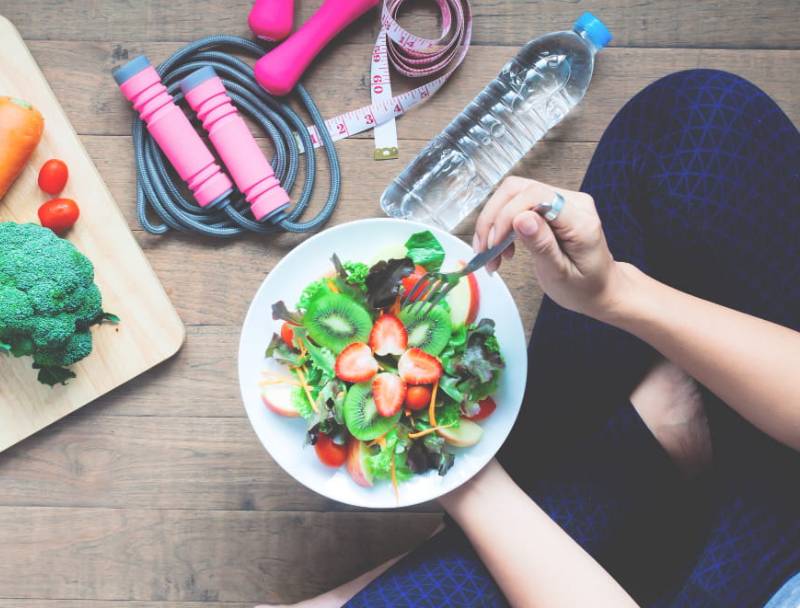
A simple plate: half vegetables, a palm-sized portion of protein, and a small serving of whole grains.
3. Stay hydrated and get enough fiber
A smaller appetite often means drinking less without noticing. Dehydration can worsen fatigue, headaches, and constipation. Keep a water bottle nearby and sip throughout the day.
Fiber from vegetables, fruit, oats, and beans supports regular digestion — just increase it gradually, along with your water intake.
4. Add strength training
Strength training is one of the most important habits to pair with a GLP-1. It signals your body to keep muscle while you lose fat.
Strength sessions per week
Moderate activity per week, like brisk walking
New to exercise? Start with bodyweight moves — squats, wall push-ups, step-ups — and build from there. A 10-minute walk after meals is an easy win, too.
“The medication helps you eat less. Your habits decide what the weight you lose is made of — and whether it stays off.”
5. Prioritize sleep and manage stress
Short sleep raises hunger hormones and cravings, and chronic stress can drive emotional eating. Aim for 7 or more hours a night and build in small stress-relief habits — a walk, breathing exercises, or time with people you enjoy.
6. Plan for the long term
Obesity is a chronic condition, and studies show weight often returns after stopping GLP-1 medication. The habits you build during treatment — regular protein, movement, and mindful eating — are your best protection, whether you stay on medication, lower your dose, or eventually stop with your provider’s guidance.
A simple weekly checklist
- Protein at every meal
- 2–3 strength sessions
- Daily walks — especially after meals
- Water bottle with you all day
- 7+ hours of sleep most nights
- Check in with your provider about side effects
Medication + support, together
Our GLP-1 programs pair doctor-prescribed treatment with ongoing provider guidance.
This article is for educational purposes and is not a substitute for medical advice. Talk to your provider before starting a new diet or exercise program.